
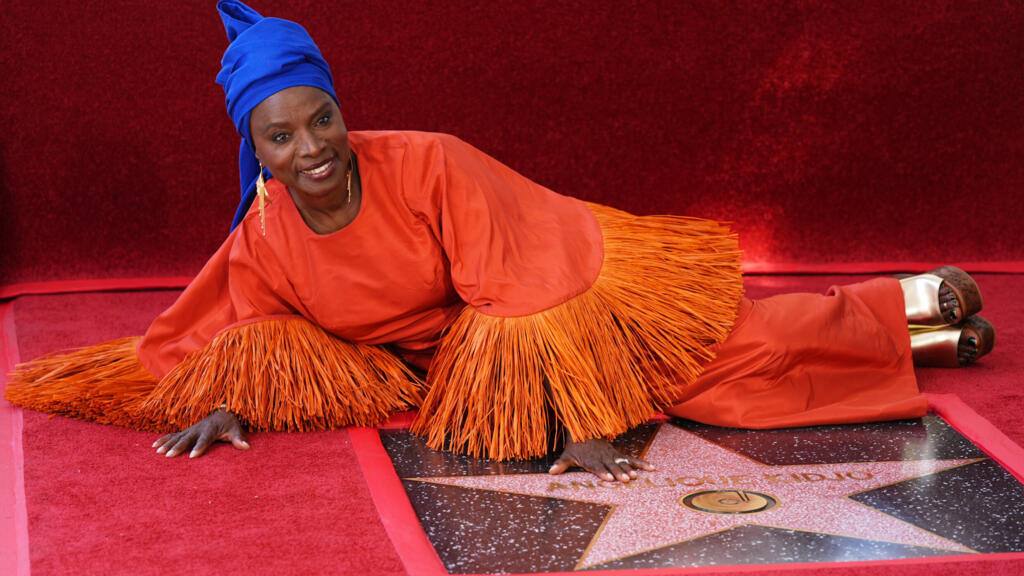
On a bright Tuesday morning in Hollywood, Angélique Kidjo stood on the sidewalk at 7011 Hollywood Boulevard and watched her name take its place among the stars. The Hollywood Chamber of Commerce unveiled the 2,854th star on the Walk of Fame on August 18, 2026, in the Recording category.
Kidjo became the first African musician—and the first Black African artist—to receive the honour. The Chamber declared the date Angélique Kidjo Day in Hollywood. Four Decades of Taking African Music Around the World

Kidjo, born in Benin in 1960, has spent more than four decades turning West African rhythms, languages and melodies into music that travels without translation. She left for Paris in the early 1980s, signed to Island Records, and released Logozo in 1991, the album that announced her as an international force.
She has never stayed still. Her records move between Fon and Yoruba traditions, funk, jazz, R&B, Latin grooves and orchestral arrangements. She has collaborated with Alicia Keys, Burna Boy, Yo-Yo Ma, Peter Gabriel, Bono, Pharrell Williams, Davido and Ayra Starr. She reimagined Talking Heads’ Remain in Light and paid tribute to Celia Cruz. Her latest album, Hope!!, continues that cross-generational conversation.
The Music Has Always Come With a Mission
Five Grammy Awards sit on her shelf, alongside the 2023 Polar Music Prize. She has performed at the Tokyo Olympics opening ceremony, recorded the 1,000th NPR Tiny Desk Concert, and earned a place on TIME’s list of the 100 most influential people.
Through her Batonga Foundation, she champions education for girls across Africa. She serves as a UNICEF Goodwill Ambassador. The music and the advocacy have always moved together.
Why the Hollywood Star Matters
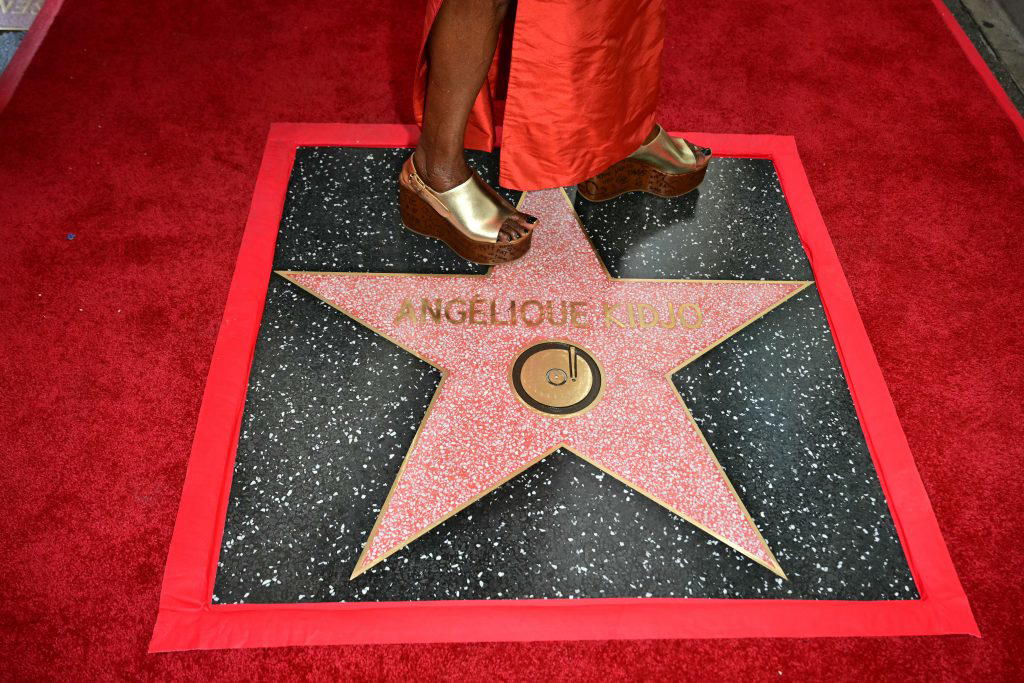
A star on the Hollywood Walk of Fame embeds an African musician into one of the most recognisable symbols of entertainment success in the world.
The sidewalks of Hollywood once felt distant from the stages of Cotonou, Paris or Lagos. Kidjo’s star shortens that distance. It records, in brass and terrazzo, that African popular music has claimed a lasting place inside institutions that once treated it as peripheral.
Kidjo May Be the First, But She Does Not Want to Be the Last
Her achievement stands on its own. The newer generation of African artists now finds doors that open more readily, yet those openings did not appear by accident. Kidjo spent decades proving that African music could sit at the centre of global culture without apology or dilution.
She still insists the story is larger than any single career.
“I may be the first,” she has said, “but I am convinced I will not be the last.”
And in her acceptance remarks, she put the claim more forcefully: “We Africans don’t know what we’ve given to the world, what we continue giving to the world; without us there’s no music possible on this planet.”
The star is fixed in the pavement.
It’ll be nice to see more African musicians follow her into that permanent landscape.
Author