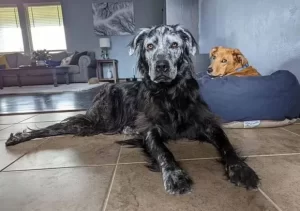
In a remarkable transformation, a black dog named Buster has turned completely white over two years, astonishing his owner and the online community. This dramatic change is due to vitiligo, a rare genetic condition in dogs that causes loss of pigmentation in the skin and hair, leading to white patches that spread over time.
Black Dog Turns Completely White Due to Vitiligo
Buster was diagnosed with vitiligo in late 2021 at just two years old. Vitiligo is an autoimmune condition affecting the pigment in dogs’ skin, hair, and even their lips and mucosa, causing color loss. Initially, Buster’s owner, Matt Smith, noticed minor white patches around Buster’s eyes, nose, and chin. Within nine months, these patches spread significantly, altering Buster’s appearance drastically.
Today, Buster, who once had a shiny black coat, now has striking white fur. Smith shared Buster’s transformation on Reddit, documenting the changes over two years. Initially met with skepticism, the detailed documentation left the Reddit community in awe, receiving comments of disbelief and fascination.
Smith’s initial post after Buster’s diagnosis garnered support and curiosity from the online community. The latest update, showing Buster’s transition to completely white, confirmed the full extent of vitiligo’s impact. Before-and-after photos reveal a dog that would be unrecognizable, except for his distinctive eyes.
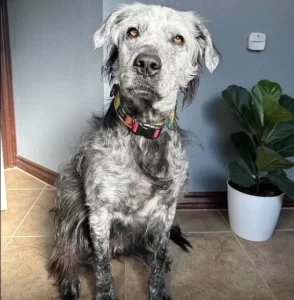
Understanding Dogs with Vitiligo
According to PetMD, dogs with vitiligo lose pigmentation in their skin and fur. It usually starts on the face, especially the nose, and can progress to the footpads and other areas, causing painless white patches. While the exact cause of vitiligo in pets is unknown, it is often genetic, with certain breeds being more prone to the condition. These breeds include Rottweilers, Dachshunds, Siberian Huskies, German Shepherds, Doberman Pinschers, Belgian Tervuren, Golden Retrievers, Yellow Labradors, Old English Sheepdogs, and German Shorthaired Pointers.
Vitiligo may also be linked to autoimmune diseases, where the immune system mistakenly attacks melanocytes, the cells responsible for pigmentation. Pet owners noticing depigmentation in their animals should consult a veterinarian to rule out underlying medical conditions. Although there is no cure, some veterinarians suggest increased sun exposure to boost melanocyte development.
One in 200 people worldwide are estimated to be affected by vitiligo, with 50% showing symptoms before the age of 20. However, the reasons behind this are still unclear.